



As a teenager, the idea of paying for your own braces might seem scary. But can you really take control of your dental health and pay for orthodontic treatment with your own money at 16? Many young people wonder about this, and the answers might surprise you1.
Key Takeaways
- The average cost of braces for children ranges between $3,000 and $7,0001
- Dental insurance often covers 50% or more of the total cost for children under 181
- Medicaid and non-profit programs may provide low-cost or free braces for qualifying youth12,
- Factors like age, treatment complexity, and location can impact the overall expense12,
- Financing options make braces more accessible for teenage patients1
Understanding the Cost of Teenage Orthodontic Treatment
Getting orthodontic treatment as a teenager can feel overwhelming. But knowing the different costs and options can help you choose wisely. Metal braces, the most common, cost between $3,000 and $7,000 without insurance. Insurance usually covers about $1,000 to $2,0003.
Ceramic braces, which are less visible, cost between $4,000 and $8,0003. Lingual braces, placed on the back of teeth, can cost $8,000 to $10,0003.
Invisalign, a clear aligner system, costs between $4,000 and $7,4003. Braces are usually worn for one to three years. Invisalign uses up to 30 custom-made clear aligners3. The treatment cost depends on the severity of the bite problem and the number of adjustments needed3.
Insurance Coverage Considerations
Dental insurance can help a lot with orthodontic treatment costs. Many plans cover an average of $1,000 to $2,000 for braces3. Medicaid or CHIP might cover braces fully for low-income families if it’s medically necessary4.
Dental savings programs can also lower the cost of braces by about 25% for members4.

The cost of orthodontic treatment for teenagers can vary a lot. But knowing your options and looking for financial help can make it more affordable. This way, you can get the smile you’ve always wanted345.
Can I Pay for Braces with My Own Money at 16?
At 16, the idea of paying for your own braces can be thrilling and scary. youth orthodontic financing options, braces payment methods for minors, teen entrepreneurship for braces, personal orthodontic investment at 16, underage employment laws You might think about using your own money for braces. But, there are a few things to keep in mind.
Braces are seen as a medical treatment, and laws might limit minors from making financial deals6. Yet, some orthodontists might have payment plans for teens6. It’s crucial to talk with your parents and orthodontist about the legal and money sides of this choice.
If you want to help pay for braces, look into jobs, saving plans, and financing for teens7. Braces can cost between $300 and $1,400 upfront, with monthly payments from $92 to $2456. There might be ways to lower these costs with smart financing.

Paying for braces at 16 is a big decision that needs careful thought and teamwork with your family and doctors. By looking into all your options, you can be more involved in your orthodontic care. This might even lead to teen entrepreneurship for braces or personal orthodontic investment at 16.
Legal Considerations for Minors Seeking Orthodontic Treatment
Getting orthodontic treatment as a minor comes with important legal points to remember. Minors usually need their parents’ consent for medical treatments, like orthodontics8. But, some states let teenagers make health choices on their own, without their parents8.
Parental Consent Requirements
Most of the time, minors need a parent or legal guardian to agree to orthodontic treatment. This makes sure everyone understands the treatment plan and costs. Orthodontists have rules for young patients who want to help pay for treatment8.
Medical Rights for Teenagers
Even though parents usually need to agree, some states let teenagers make health choices by themselves. This includes getting orthodontic treatment without their parents’ say-so. It’s key to know the laws in your state to see how much freedom a minor has in health matters8.
Payment Agreement Guidelines
Minors can’t legally agree to pay for orthodontic care. An adult, like a parent or guardian, must sign a payment plan. Orthodontists have rules for young patients who want to help pay for their treatment8.
It’s vital to understand the laws about minors and orthodontic treatment. Knowing about consent, medical rights, and payment plans helps families make good choices. This way, they can smoothly get through the process of improving their oral health8.
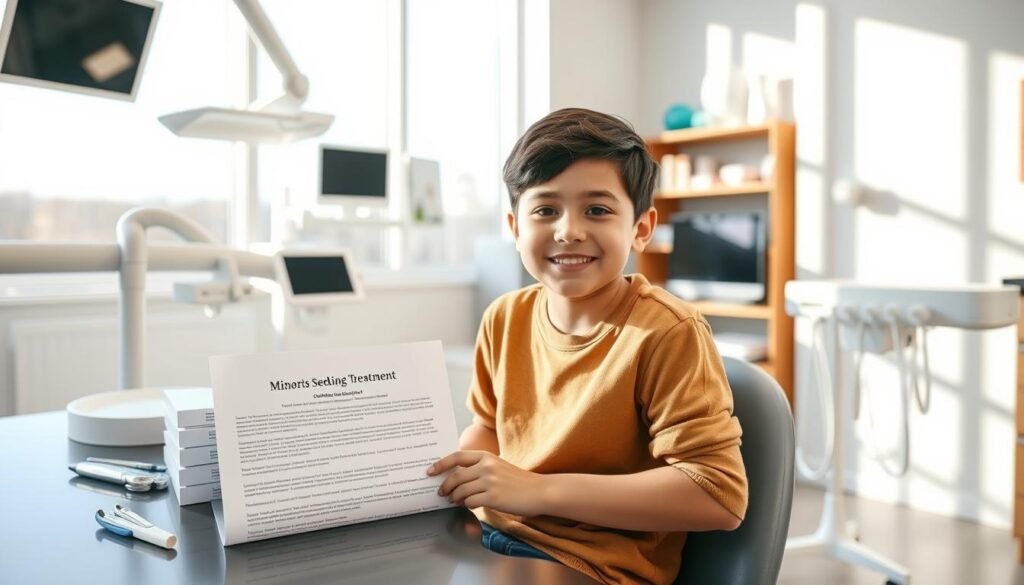
Smart Savings Strategies for Teen Orthodontic Care
Getting braces as a teenager can feel overwhelming. But, with smart saving and budgeting, you can manage the cost. This way, you can help pay for your treatment.
Start by opening a savings account just for your braces. Set up automatic transfers from your earnings. This helps you save steadily. Also, cutting back on things like subscriptions and eating out can increase your savings9.
Getting a part-time job is another great way to save. Keeping track of your spending helps you see how close you are to your goal. Some teens use apps or wait 30 days before big buys to avoid spending too much10.
Talk to your parents and orthodontist about your savings plan. This way, you can make a budget that fits your life. With careful planning and smart money habits, you can pay for your braces and get the smile you dream of.
Payment Plans and Financing Options for Young Patients
Getting braces can be expensive, especially for teens without help from parents. But, many orthodontists have flexible payment plans and financing options. These help make dental care affordable for young people, making them more independent in their dental health.
Monthly Payment Structures
Monthly payment plans are a common choice. They let patients pay for braces over time. This is great for teens with limited money, as it makes the cost easier to handle11.
Dental Savings Programs
Dental savings programs are another way to cut costs. They offer discounts on orthodontic care, which can save up to 25%11. This is different from regular dental insurance.
Teen-Friendly Payment Methods
Orthodontists might work with groups like Smiles Change Lives for free or low-cost braces. Teens can also use prepaid debit cards or mobile apps to pay for their treatment. This teaches them about financial responsibility11.
These financing options help teens get the smile they want without relying on parents. It lets them take charge of their dental health and sets them up for good oral care in the future.
“Investing in your dental health, even as a teenager, is an investment in your future. These flexible payment solutions make it possible to get the care you need without breaking the bank.”
The cost of braces can change a lot. It depends on insurance, how long treatment lasts, and the type of braces12. Teens can find the right financing to reach their orthodontic goals and boost their confidence and well-being.
Conclusion
Paying for braces at 16 can be tough but doable. Knowing the cost of orthodontic treatment for teens4 is key. Also, understanding legal rules for minors getting care13 helps a lot. Young adults can manage their dental expenses4 by saving smartly.
Getting braces at 16 needs careful planning and support from parents. It’s also important to know the legal side of things13. Working with skilled orthodontists helps teens handle financing on their own14.
Getting braces with your own money teaches a lot about money and health13. Teens can look into different ways to pay, like dental savings plans. This way, they can handle teen dental care funding, juvenile braces affordability, and teen orthodontic financing well4.
FAQ
Can I pay for braces with my own money at 16?
Paying for braces at 16 is doable but has its hurdles. Orthodontic care is a medical service, and minors might face legal hurdles in financial deals. Yet, some orthodontists might offer payment plans for teens eager to pay.
What is the average cost of braces for teenagers?
The cost of braces for teens varies, from ,685 to ,500, the ADA says. The price depends on the type of braces, the orthodontist, and where you live. Metal braces are often the cheapest, costing between ,000 and ,000.
How can insurance coverage affect the cost of braces?
Insurance can cut down what you pay for braces. Most plans cover
FAQ
Can I pay for braces with my own money at 16?
Paying for braces at 16 is doable but has its hurdles. Orthodontic care is a medical service, and minors might face legal hurdles in financial deals. Yet, some orthodontists might offer payment plans for teens eager to pay.
What is the average cost of braces for teenagers?
The cost of braces for teens varies, from $4,685 to $6,500, the ADA says. The price depends on the type of braces, the orthodontist, and where you live. Metal braces are often the cheapest, costing between $3,000 and $7,000.
How can insurance coverage affect the cost of braces?
Insurance can cut down what you pay for braces. Most plans cover $1,000 to $2,000. The cost depends on how bad your bite problem is, how many adjustments you need, and how long treatment lasts.
What are the legal considerations for minors seeking orthodontic treatment?
Minors need a parent’s okay for medical treatments, like braces. But, some states let teens make health choices on their own. Still, you can’t sign a contract for braces without an adult’s help.
What savings strategies can teens use to contribute to their orthodontic treatment costs?
Teens can save in many ways. They can open a savings account, cut back on spending, or get a part-time job. Making a budget and keeping track of expenses helps see how close you are to your goal.
What payment plans and financing options are available for young orthodontic patients?
Many orthodontists have monthly payment plans to help with costs. Dental savings plans can cut braces costs by 25%. Some orthodontists work with non-profits to offer free or low-cost braces to low-income families.
,000 to ,000. The cost depends on how bad your bite problem is, how many adjustments you need, and how long treatment lasts.
What are the legal considerations for minors seeking orthodontic treatment?
Minors need a parent’s okay for medical treatments, like braces. But, some states let teens make health choices on their own. Still, you can’t sign a contract for braces without an adult’s help.
What savings strategies can teens use to contribute to their orthodontic treatment costs?
Teens can save in many ways. They can open a savings account, cut back on spending, or get a part-time job. Making a budget and keeping track of expenses helps see how close you are to your goal.
What payment plans and financing options are available for young orthodontic patients?
Many orthodontists have monthly payment plans to help with costs. Dental savings plans can cut braces costs by 25%. Some orthodontists work with non-profits to offer free or low-cost braces to low-income families.